
There are more than 13,000 apps in the Shopify App Store, and that number is the problem. Most merchants do not need 30 apps. They need the right handful, each one doing a real job, none of them slowing the store down.
So instead of a random pile of “top apps,” we sorted this list by where each tool helps in your store’s journey: grabbing attention, helping people buy, building trust, keeping customers close, and finally knowing whether any of it is actually making money. Every app below has a free plan or a free way to start, so you can test before you commit.
Quick note for transparency: two of these apps, FlexiBar and Gratify, are built by us here at Shopiment. We still think they earn their place, and we will tell you exactly what they do and what they cost so you can judge for yourself.
Here is the stack.
1. FlexiBar, for grabbing attention at the top of your store
Most store visitors leave within a few seconds, often without ever seeing your sale, your free-shipping threshold, or your best offer. FlexiBar fixes that by putting the right message at the top of the page, exactly when it matters.
It covers every kind of bar you would want: announcement bars, countdown timers, marquees, sliders, and sticky bars, all styled to match your theme without touching code. The part that makes it different is the AI. FlexiBar can write your bar copy for you and translate it into more than 60 languages, so an international store can speak to every visitor in their own language without hiring a translator.
The newest feature is the Selling Bar. It turns a plain announcement bar into an offer: a shopper taps the bar, a bundle opens, and they add the whole thing to the cart in one tap, with no discount codes to manage. It is a simple way to lift average order value right from the top of the page, which is usually wasted space.
Standout features
- AI-written bar copy, auto-translated into 60+ languages
- Announcement, countdown, marquee, slider, and sticky bars, no code
- Selling Bar bundles that add to cart in one tap
- Targeting by page, country, and device, plus scheduling
Pricing: Free plan available. Pro is $9.99/month (14-day free trial). Built for Shopify.
Best for: any store that runs promotions, ships internationally, or wants an easy win on average order value.
2. Judge.me, for proving you are worth trusting
A first-time visitor has no reason to trust you yet. Reviews are the fastest way to earn that trust, and Judge.me is one of the most-installed review apps on Shopify for good reason. It collects photo and video reviews on autopilot, shows star ratings on product and collection pages, and syncs those ratings to Google so your listings stand out in search.
It is fast, it does not slow the storefront, and the free plan is genuinely usable for a new store. Social proof is not optional in 2026, and this is the easiest place to start.
Pricing: Free plan available, with an affordable paid tier.
Best for: every store, especially new ones that need to build credibility quickly.
3. Shopify Email (or Klaviyo), for owning the relationship
Ads rent attention. Email and SMS let you own it. If you want to keep things simple and free, Shopify Email is built right into your admin and lets you send branded campaigns using your existing product data. If you are ready to scale with automations like abandoned-cart and post-purchase flows, Klaviyo is the ecommerce standard and has a free tier to start.
Either way, the point is the same: capture the email or phone number while you have the visitor’s attention, then bring them back without paying for the click twice.
Pricing: Shopify Email is free to start. Klaviyo has a free plan that scales with your list.
Best for: every store. This is the channel with the best long-term return on your effort.
4. Gratify, for turning one-time buyers into regulars
The average Shopify store loses most of its customers after the first purchase, and winning a repeat customer costs a fraction of finding a new one. Gratify is a loyalty and rewards app, built to close that gap.
It gives shoppers a reason to come back with points, rewards, and VIP tiers, and it is deliberately quick to set up. You can switch on 15+ ways to earn, things like purchases, reviews, signups, birthdays, and social follows, in minutes rather than configuring a hundred rules. Customers start collecting points right away, and the VIP tiers give your best buyers something to climb toward, which is exactly where repeat revenue tends to live.
Standout features
- 15+ ways to earn, live in minutes
- Points, redeemable rewards, and VIP tiers
- Rewards that drive repeat purchases on autopilot
Pricing: Free plan available.
Best for: stores in repeat-purchase categories like supplements, beauty, food, and fashion, and any solo founder who wants loyalty running without a big setup project.
5. GoProfit, for knowing your real numbers
Revenue feels great. Profit is what actually pays you. The trouble is that your true profit can be difficult to calculate when Shopify fees, COGS, shipping costs, taxes, and ad spend are tracked across different places. GoProfit (by GODISOFT) brings your store’s financial data together in a real-time profit dashboard, helping you understand how your business is actually performing.
GoProfit combines profit and loss reporting, COGS tracking, custom shipping profiles, expense tracking, and marketing analytics in one place. Connect your advertising accounts to analyze marketing performance and ROI alongside your store’s profitability. You can drill down into per-order profit, review product and marketing performance, and use 24/7 profit monitoring to help spot changes that may need your attention.
Standout features
- Real-time profit dashboard and P&L reporting
- COGS tracking, custom shipping profiles, and expense management
- Advertising performance and marketing ROI analytics
- Per-order profit analysis and product-level insights
- Profit snapshots and 24/7 monitoring
Pricing: Free plan for up to 50 orders/month. Paid plans start at $29/month, with Pro at $79/month and Scale at $199/month. Built for Shopify, rated 4.9/5 across 90+ reviews.
Best for: Shopify merchants who want a clearer view of their profitability, particularly stores investing in advertising or preparing to scale.
6. Shopify Inbox, for talking to customers in real time
A hesitant shopper with one unanswered question is a lost sale. Shopify Inbox adds a chat widget to your store and routes messages to one place, so you can answer quickly from your phone or desktop. It is free, native to Shopify, and shows customers product and order details right inside the conversation, which turns support into a sales tool.
Pricing: Free.
Best for: any store where pre-sale questions or support speed affect conversions.
Build your stack, not a junk drawer
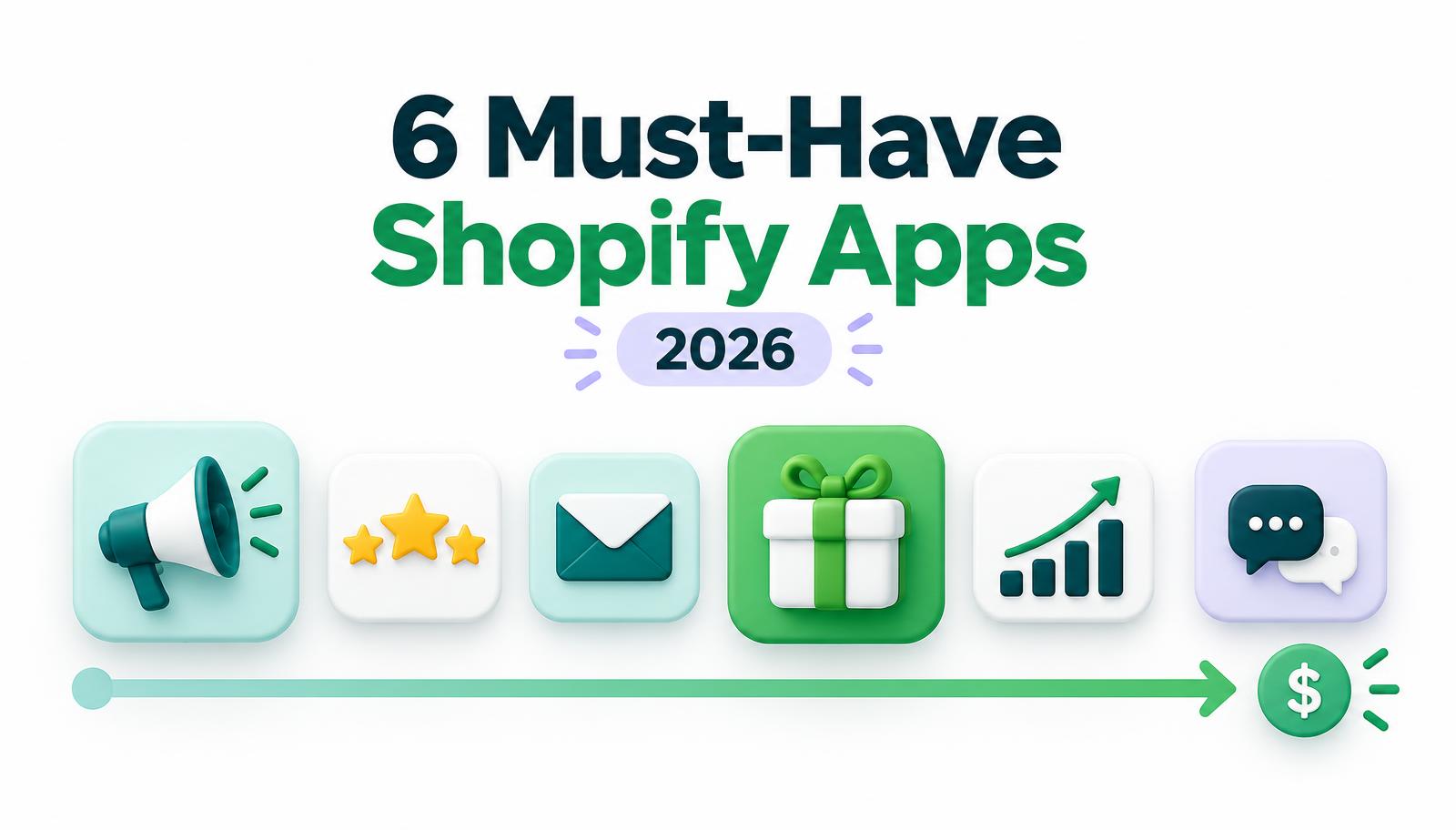
You do not need all six on day one. Pick the one that matches your biggest gap right now: grabbing attention (FlexiBar), proving trust (Judge.me), owning the relationship (email), bringing people back (Gratify), knowing your real numbers (GoProfit), or closing the deal in chat (Shopify Inbox). Add the next one when the first is earning its keep.
If attention and retention are where you are losing money, that is exactly what we build for. FlexiBar grabs the shopper at the top of the page and lifts order value with Selling Bar bundles, and Gratify keeps them coming back. Both have a free plan, so you can see the difference before you pay a cent.
Install FlexiBar free · Explore Gratify
Full disclosure: FlexiBar and Gratify are made by Shopiment. The other apps on this list were chosen because they genuinely do a job worth doing. Pricing and ratings were accurate at the time of writing and may change.
Ready to run bars that actually sell?
Flexibar is free to install. AI copy in 60+ languages, countdown timers, and a free Selling Bar that lets shoppers build a bundle and add it to cart - no credit card required.
Install Flexibar Free →⭐ Free on the Shopify App Store · Instant setup · No credit card