
The Setup: Two Dominant Loyalty Models
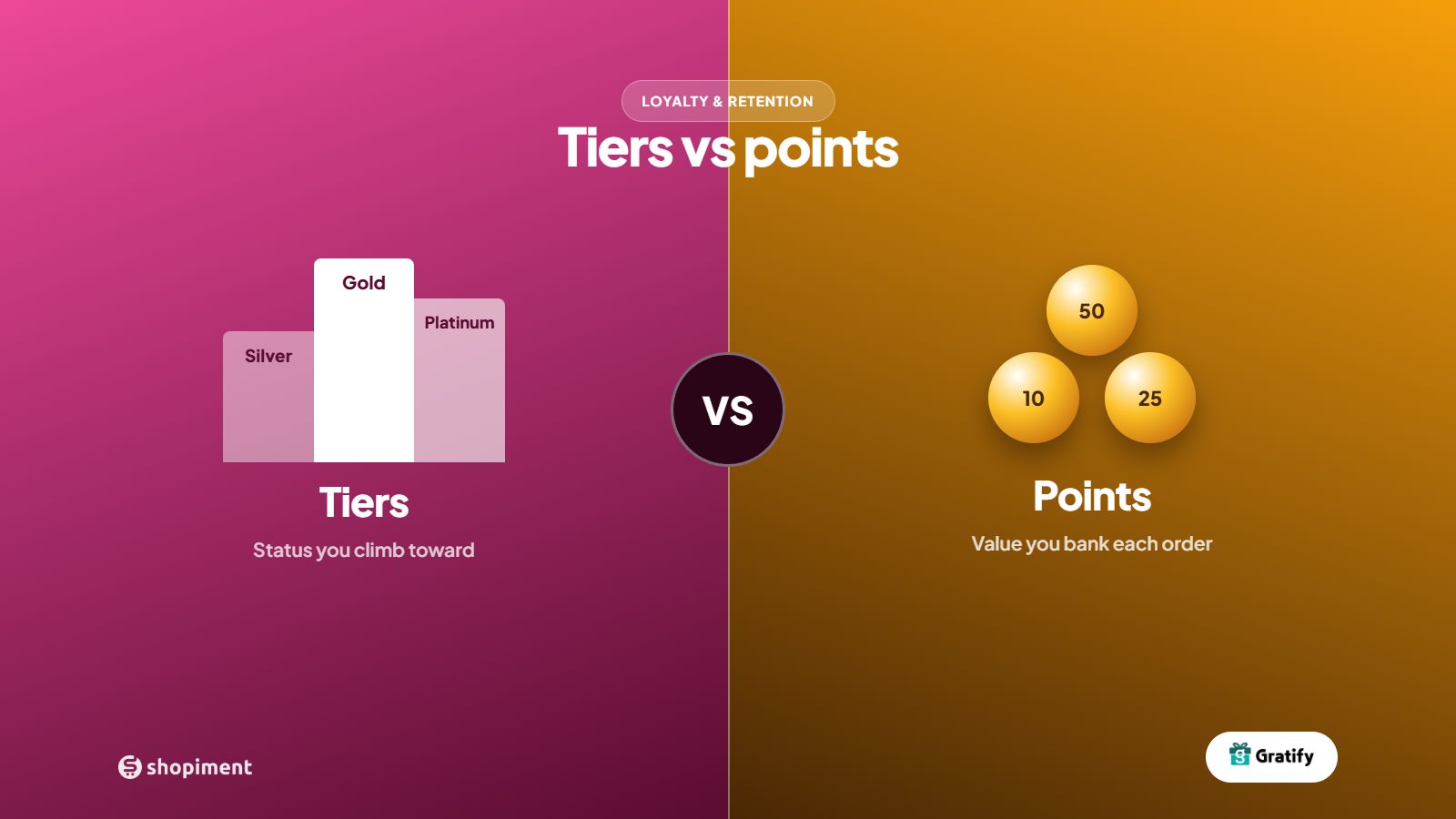
Points-based loyalty is the default model for most Shopify apps. Spend money, earn points, redeem points for rewards or discounts. It's transparent, universal, and customers understand it immediately.
Tiered loyalty adds status levels on top of the points structure. Spend enough to reach Gold tier, unlock better rewards, stay there by maintaining your spend level. It adds aspiration and social recognition to what would otherwise be a purely transactional mechanic.
Both work. But they don't work equally well for every type of store.
When Points-Only Wins
High-Frequency, Low-AOV Stores
For consumable products - skincare, supplements, coffee, pet food - customers buy frequently at relatively low order values. A points program rewards that frequency directly. After 5 or 10 purchases, the redemption feels earned. The mechanic matches the natural purchasing behavior.
For these stores, the complexity of tiers often just adds confusion without motivating meaningfully different behavior. Customers already buy often - the goal is to make each repurchase feel rewarded, not to push them toward a higher status they didn't ask for.
When Tiered Programs Win
Mid-High AOV Stores With Moderate Purchase Frequency
For stores where customers buy 2–4 times per year at $75–$200+ per order - fashion, homewares, electronics, premium beauty - tiered loyalty programs significantly outperform flat points structures.
The reason: status motivation. Customers in these categories are making considered purchases. They care about the brand relationship, not just the transaction. A Gold tier membership with real perks (free express shipping, early access to new collections, a dedicated customer service line) creates a brand relationship that a points balance never does.
The caveat: tier benefits must be genuinely valuable. Cosmetic tiers with no real perks are seen through instantly and damage trust. If you're going to have tiers, make the top tier feel meaningfully different.
The Hybrid Model
The most effective programs for stores with broad customer bases combine both: points for every purchase (universal, transparent, motivating for all customers) plus tiers that unlock additional benefits at higher spend thresholds (aspirational, status-driven, motivating for high-value customers).
This way, a first-time buyer immediately starts earning and feels rewarded, while a repeat high-spender has a clear status to aspire to and maintain.
The Numbers That Should Drive Your Decision
- AOV under $50 + 8+ purchases/year: Points-only model
- AOV $50–$150 + 3–7 purchases/year: Hybrid model
- AOV $150+ + under 3 purchases/year: Tiered model with premium perks
What Both Models Require to Work
Regardless of structure, loyalty programs fail for the same reasons: the rewards aren't valuable enough, the redemption threshold is too high, and the program isn't visible in the store experience. The most effective implementations surface loyalty status and point balances in the announcement bar, in the cart drawer, and on the account page - not just in a separate loyalty dashboard that customers never visit.
Gratify is coming - join the beta for early access
Tiered loyalty for Shopify, built by the Shopiment team. Be first in line.
Join Beta ListReady to turn buyers into repeat customers?
Gratify is free to install. Points, VIP tiers, and referrals - live in five minutes, no credit card required.
Install Gratify Free →⭐ Free on the Shopify App Store · Instant setup · No credit card